Across Canada, public basketball courts are undergoing a major transformation. What were once simple asphalt surfaces with faded lines are now being redesigned into high-quality, multi-use, and community-driven spaces. Cities are investing in renovations not just to improve playability, but to enhance safety, accessibility, and long-term durability.
1. Why Cities Are Investing in Court Renovations
Municipalities across the country—from Toronto to Vancouver and Montreal—are recognizing the value of public courts as essential community infrastructure. These spaces:
- Promote physical activity and public health
- Provide free recreational opportunities
- Support youth engagement and local sports development
- Act as social hubs for neighborhoods
A well-maintained court can significantly increase park usage and community interaction.
2. Upgrading Surface Materials
One of the most important aspects of modernization is replacing outdated asphalt with improved surfaces. Many cities now use:
- Acrylic sport coatings for better traction and durability
- Cushioned systems that reduce joint impact
- Modular tile systems for quick installation and drainage
These materials are designed to withstand Canada’s harsh climate, including freeze-thaw cycles, heavy rain, and snow.
3. Climate-Resilient Design
Canadian weather presents unique challenges. Modern renovations now include:
- Proper drainage systems to prevent water pooling
- UV-resistant coatings to reduce fading
- Crack-resistant base layers to handle temperature fluctuations
This ensures courts last longer with fewer repairs, especially in cities with extreme seasonal changes.
4. Multi-Sport Functionality
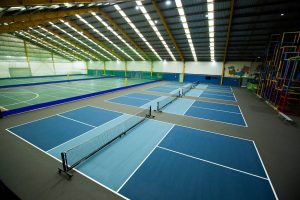
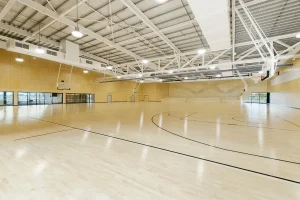
To maximize limited urban space, many renovated courts are designed for multiple sports. In addition to basketball, courts are often lined for:
- Pickleball
- Volleyball
- Futsal
This trend allows cities to serve a wider population without requiring additional land or facilities.
5. Accessibility and Inclusive Design
Modern public courts are increasingly built with accessibility in mind. Key upgrades include:
- Smooth, even surfaces for wheelchair access
- Wider entry points and pathways
- Seating and shaded areas for spectators
Some parks are also incorporating adaptive sports features, ensuring that people of all abilities can use the space.
6. Community-Driven Design and Art Integration
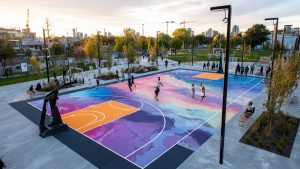
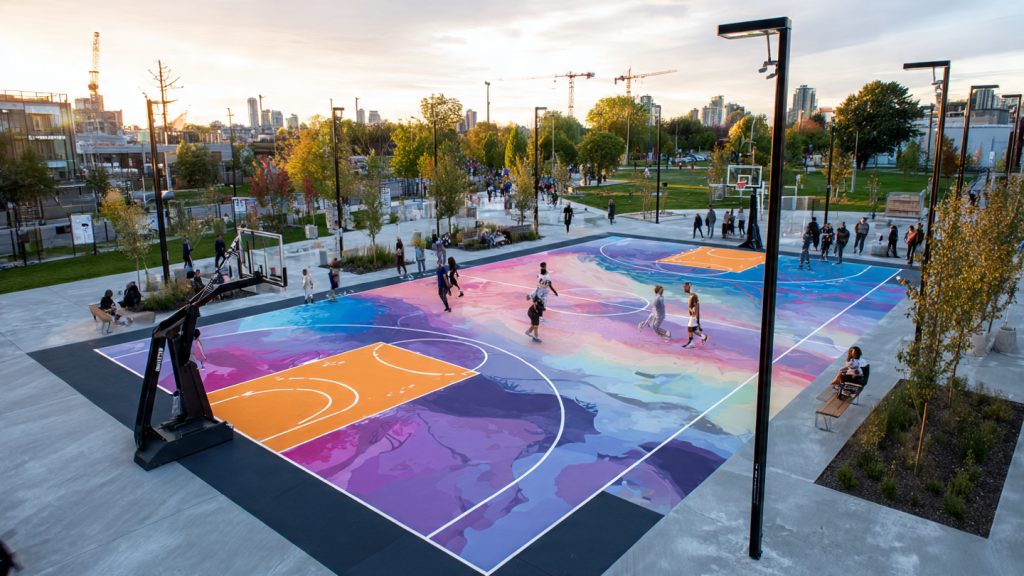
A growing trend in Canadian cities is involving the community in the design process. Local artists and residents contribute ideas for:
- Court colors and themes
- Murals and graphics
- Cultural or neighborhood representation
This approach transforms courts into landmarks that reflect the identity of the surrounding community, rather than just functional spaces.
7. Improved Lighting and Safety Features
Lighting upgrades are a major part of modernization efforts. Many parks now use LED lighting systems that:
- Extend playable hours into the evening
- Improve visibility and safety
- Reduce energy consumption
Additional safety features may include fencing, security cameras, and better park layouts to increase visibility from surrounding areas.
8. Funding and Partnerships
Court renovations are often made possible through a mix of funding sources:
- Municipal budgets
- Corporate sponsorships
- Non-profit organizations like MLSE Foundation
- Community fundraising initiatives
Public-private partnerships have become especially important in accelerating upgrades and maintaining facilities long-term.
9. Long-Term Maintenance Planning
Modern court renovations are not just about construction—they also include maintenance strategies. Cities now plan for:
- Routine cleaning and resurfacing
- Scheduled repainting of lines and graphics
- Surface inspections to prevent major damage
This proactive approach helps extend the lifespan of courts and ensures they remain safe and visually appealing.
Public basketball court renovations in Canada are about more than aesthetics—they reflect a broader shift toward healthier, more inclusive, and better-designed communities. By investing in durable materials, climate-resistant construction, and community-focused design, cities are transforming courts into vibrant spaces that serve people year-round.
As these trends continue, public courts will play an even greater role in shaping urban life, offering accessible and engaging environments for recreation, connection, and sport.
If you want, I can also write a second blog in this series (same Canadian angle) like “Cost Breakdown of Renovating a Public Basketball Court in Canada” or “Best Materials for Outdoor Courts in Cold Climates.”