Managing a school or recreation sports facility requires balancing safety, performance, and long-term cost control. Athletic floors and courts are high-value assets, and without structured planning, maintenance expenses can increase quickly and unpredictably.
This article outlines a practical, evidence-based approach to budgeting for sports facilities, focusing on flooring systems, court layouts, and sustainable maintenance planning.
Understanding the True Cost of Sports Facilities
Upfront installation costs represent only a portion of the total investment. Most expenses occur throughout the operational life of a facility and should be anticipated during budget planning.
These costs typically include installation or resurfacing, routine maintenance, scheduled refinishing, safety and compliance testing, and unplanned repairs caused by heavy use or environmental factors. Facilities that overlook lifecycle planning often face early surface deterioration and increased liability risk.
Athletic Flooring Systems and Budget Strategy
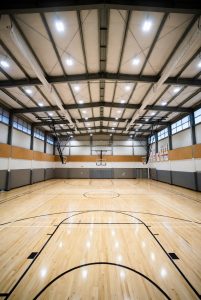
Gym and multi-sport flooring systems experience constant use and must maintain consistent performance for both safety and playability.
Budget planning should consider flooring material selection, usage intensity, sport variety, indoor climate conditions, and required performance characteristics such as traction, shock absorption, and ball response. When maintenance is planned properly, athletic floors can remain functional for decades rather than requiring premature replacement.
Court Line Markings and Layout Planning
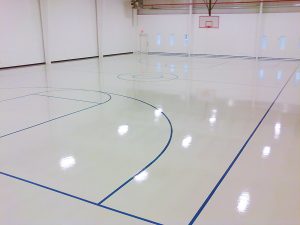
Court layouts and line markings are essential to both usability and regulatory compliance, yet they are often underestimated during budgeting.
Facilities should plan for the number of sports per surface, durability of coatings or paints, measurement standards, and future reconfiguration needs. Thoughtful planning reduces repainting frequency and allows spaces to adapt as programs evolve.
Maintenance and Refinishing Planning
Preventive maintenance is one of the most cost-effective strategies in facility management. Regular care preserves surface integrity and minimizes long-term costs.
Maintenance planning typically includes routine cleaning schedules, periodic deep cleaning, recoating or refinishing cycles, and traction or slip-resistance testing. Facilities that follow structured maintenance programs experience fewer disruptions and more predictable expenditures.
Sports Equipment and Structural Considerations
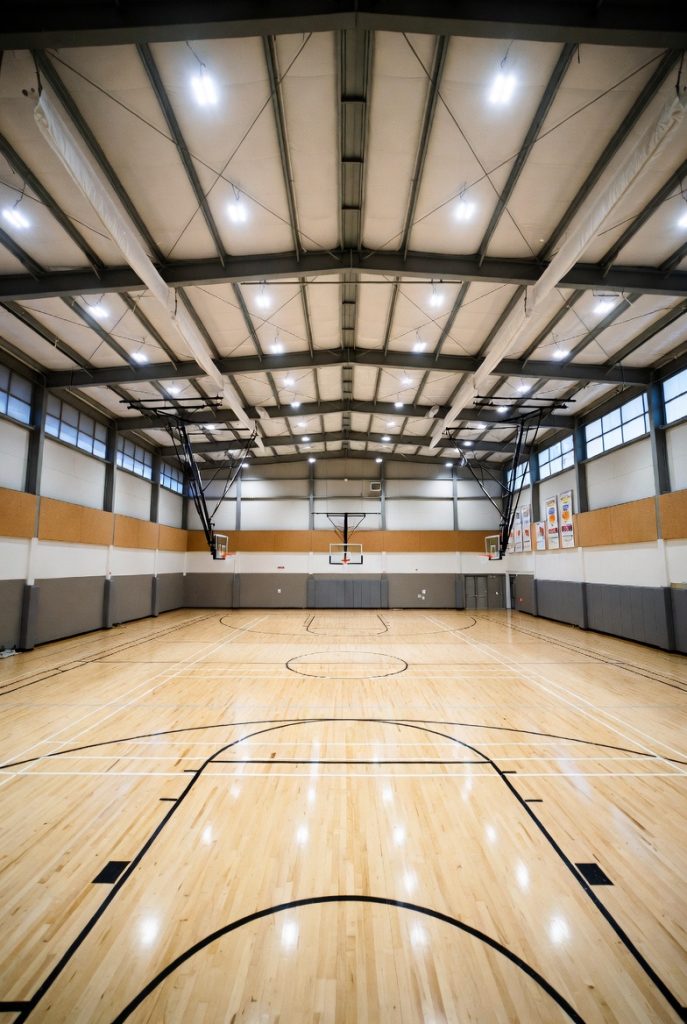
Flooring budgets should extend beyond the surface itself to include related equipment and structural elements that affect safety and performance.
These often include basketball backboards, ceiling-mounted equipment, anchoring systems, mounting hardware, and protective padding. Routine inspections and planned upkeep help prevent unexpected failures and emergency repairs.
Short-Term Spending Versus Long-Term Planning
Reactive repairs may appear cost-effective in the short term, but they often lead to higher total ownership costs.
Facilities that plan proactively benefit from scheduled maintenance, predictable refinishing timelines, reduced downtime, and better capital forecasting. Long-term planning improves operational stability and surface longevity.
Compliance, Safety, and Risk Management
Sports facilities must meet safety and performance expectations to protect users and operators alike.
Budget planning should include provisions for slip resistance testing, sport-specific standards, accessibility requirements, and regular condition assessments. Ongoing monitoring reduces liability exposure and supports safe daily operation.
Multi-Year Budget Forecasting
Leading organizations treat sports facilities as long-term assets rather than one-time projects.
Effective planning includes five- to ten-year maintenance forecasts, scheduled refinishing cycles, coordination with academic or seasonal calendars, and alignment with usage growth. This approach minimizes sudden capital demands and extends asset life.
Who This Planning Approach Serves Best
This budgeting framework is especially relevant for school boards, private schools, municipal recreation departments, colleges and universities, community sports centres, and facility managers responsible for long-term asset performance.
Final Thoughts
Well-maintained sports facilities are long-term investments in safety, performance, and community trust. Budgeting with a lifecycle mindset allows organizations to control costs, reduce risk, and maintain high-quality athletic environments year after year.
Planning ahead protects surfaces, budgets, and the people who use them.