Installing basketball hoops in a school gymnasium or recreation center involves more than mounting a backboard. A suitable basketball hoop system must fit the building’s structure and available space, and support different court layouts. It must also match the intended level of play.
Additionally, the activities taking place in the facility should influence the choice. This ensures safety, durability, and ease of use. Consider future needs such as growth in programs and different age groups. A flexible system accommodates equipment storage and quick reconfiguration.
For schools, universities, municipalities, churches, and multi-purpose sports facilities, choosing the right basketball equipment can improve usability, support safe play, and help ensure the gymnasium serves its users for years to come.
Whether you are planning a gymnasium, upgrading an existing court, or replacing outdated equipment, this guide covers basketball hoop options.
Additionally, this guide explains the main systems, installation considerations, and factors to evaluate before starting your project.
1. Choosing the Right Basketball Hoop System
The first step in any basketball hoop installation project is determining which type of system best suits the facility.
Commercial gymnasiums commonly use wall-mounted, ceiling-suspended, or floor-anchored basketball systems. Each option has different space requirements, structural considerations, and operational advantages.
Wall-Mounted Basketball Hoops
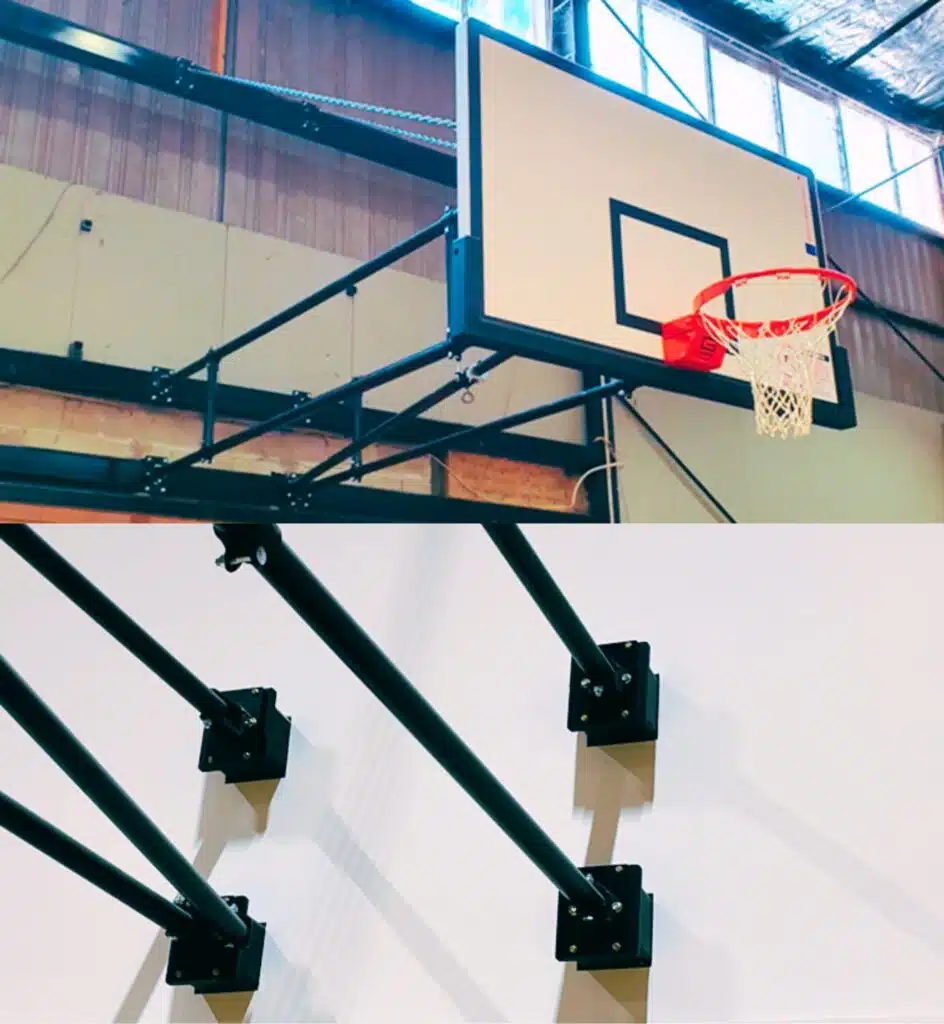
Wall-mounted basketball hoops attach to a suitable structural wall or support framework. Depending on the design, the system may remain fixed in position or fold against the wall when not in use.
These systems can be suitable for smaller school gymnasiums, training facilities, and recreation centers where ceiling-mounted equipment is not practical.
Important considerations include the available wall structure, backboard projection, mounting height, clearance around the playing area, and whether the hoop must be moved between activities.
A wall-mounted system should never be selected based on appearance alone. The building structure and the manufacturer’s mounting requirements must be assessed before installation.
Ceiling-Suspended Basketball Hoops
Ceiling-suspended basketball systems are commonly used in larger school gymnasiums, universities, and multi-purpose athletic facilities.
The support structure extends from the building’s overhead structure, allowing the backboard and rim to project into the playing area. Many systems can be raised or lowered using manual or powered mechanisms.
Retractable systems are especially useful when the gymnasium accommodates volleyball, badminton, assemblies, or other activities that require unobstructed floor space.
Before selecting a ceiling-suspended system, confirm the available ceiling height, structural capacity, support locations, lighting clearances, and the space required for the equipment when deployed and retracted.
Floor-Anchored Basketball Systems
Floor-anchored systems use a structural support installed into an appropriately engineered floor foundation or anchoring arrangement.
These systems can be suitable for facilities designed around permanent basketball installations, depending on the building layout and the equipment specification.
The anchoring method must be compatible with the floor assembly and underlying structure. In a gymnasium with a sprung hardwood floor, for example, installation planning must account for the flooring system and its movement rather than treating the surface as ordinary concrete.
The suitability of a floor-anchored system should be established during the design and structural assessment stage.
2. Selecting the Right Backboard
The backboard is one of the most visible components of a basketball hoop system, but appearance is only one factor to consider.
Backboards differ in material, thickness, dimensions, mounting arrangements, and intended application.
Tempered Glass Backboards
Tempered glass backboards are widely used in competitive and higher-level basketball environments.
They provide a clear playing surface and consistent rebound characteristics when manufactured and installed as part of an appropriate system.
Glass backboards may be suitable for universities, competitive school programs, and recreation facilities that require a more competition-oriented setup.
The specified backboard, frame, rim, and support structure should be compatible and appropriate for the intended level of use.
Acrylic Backboards
Acrylic backboards provide another option for institutional and recreational settings.
Depending on the product, they can offer good visibility and a different balance of cost, weight, and performance compared with glass.
When comparing acrylic systems, review the manufacturer’s specifications, intended use, impact performance, mounting requirements, and warranty.
Steel and Other Backboard Materials
Other materials are available for particular recreational, institutional, and outdoor applications.
The appropriate choice depends on where the system will be installed, how frequently it will be used, the expected level of play, and the required durability.
For a commercial project, the backboard should be selected as part of a complete system rather than purchased as an isolated component without checking compatibility.
3. Determining the Correct Height and Court Position
Basketball hoop placement affects gameplay, player movement, and the usability of the court.
For a regulation basketball setup, the rim is typically positioned 10 feet above the playing surface. However, facilities serving younger players or specialized programs may require adjustable heights or other configurations.
The final installation should be based on the intended rules of play, equipment specifications, and applicable requirements.
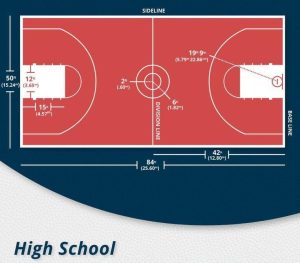
Positioning also requires careful attention to the backboard’s relationship to the end line, the court layout, and the available space behind and beside the playing area.
During planning, consider:
- The intended court dimensions and orientation.
- The position of the end line and surrounding markings.
- The backboard’s projection into the court.
- Available run-off and circulation space.
- Wall padding and other protective equipment.
- Ceiling height, lighting, and overhead obstructions.
- The location of doors, dividers, curtains, and other gym equipment.
These details are particularly important when basketball hoops are being installed in an existing gymnasium with limited space or multiple sports layouts.
4. Structural Requirements for Basketball Hoop Installation
One of the most important parts of commercial basketball hoop installation is confirming that the building can safely support the selected equipment.
Basketball systems can impose significant loads on their mounting structures, particularly when they include projecting support arms, moving components, or retractable mechanisms.
The suitability of a wall, ceiling structure, or floor anchoring arrangement should be confirmed before installation begins.
Depending on the system and building, the project may require:
- A review of available structural drawings.
- Verification of the proposed mounting locations.
- Assessment of the supporting structure and anchorage.
- Coordination with a qualified structural engineer where required.
- Confirmation of the manufacturer’s installation specifications.
- Review of clearances for the deployed and stored positions.
A wall that appears solid does not necessarily have the structural capacity required for a basketball system. Similarly, a ceiling that supports lighting or other lightweight equipment should not automatically be assumed suitable for a suspended hoop.
Structural reinforcement may be necessary in some facilities, especially when replacing an older system with a different design or installing equipment in a building that was not originally designed for basketball.
These requirements should be identified early to avoid delays and unexpected construction costs.
5. Fixed vs. Retractable Basketball Hoops
A fixed basketball hoop remains in its playing position, while a retractable system can be moved out of the way when the gymnasium is used for other activities.
The best choice depends on how the facility operates.
Fixed systems may be appropriate when basketball is the primary use of the space and the equipment does not need to be moved regularly.
Retractable systems can provide greater flexibility in multi-purpose gymnasiums. They allow the facility to transition between basketball and activities that require different floor layouts or overhead clearance.
Retractable systems may use manual or powered operating mechanisms, depending on the equipment selected.
When evaluating a retractable system, consider its operating method, maintenance requirements, available storage position, ceiling clearance, and compatibility with other gymnasium equipment.
If the facility uses volleyball standards, divider curtains, overhead lighting, or other suspended equipment, the entire arrangement should be coordinated before installation.
6. Electrical and Operating Requirements
Some commercial basketball systems use powered mechanisms to raise and lower the equipment.
These installations may require electrical work, control switches, suitable power connections, and coordination with other building systems.
The electrical requirements depend on the manufacturer’s specifications and the particular system being installed.
Planning should establish where controls will be located, how authorized staff will operate the equipment, and how the system will be isolated or serviced when necessary.
Only appropriately qualified personnel should perform electrical work. Operating instructions and any required staff training should be provided before the equipment is placed into regular service.
Facilities should also establish procedures to prevent use of a system when it is being serviced or when a fault has been identified.
7. Integrating Basketball Hoops Into a Multi-Sport Gymnasium
Many school and community gymnasiums accommodate more than basketball.
The same space may be used for volleyball, badminton, pickleball, physical education classes, assemblies, and community events. Basketball equipment must therefore work within a larger facility plan.
Before installing hoops, review the complete gymnasium layout rather than considering each basketball system independently.
Important factors include:
- The number and position of basketball courts.
- The relationship between basketball and volleyball layouts.
- Clearance for badminton equipment and other activities.
- The operation of divider curtains.
- The position of lighting and ceiling-mounted equipment.
- Storage requirements for retractable systems.
- Access for maintenance and future equipment replacement.
Retractable basketball hoops can be particularly useful in these environments, but their placement must be coordinated with the full range of activities.
For new construction, basketball equipment should be incorporated into the design process as early as possible. For existing facilities, a site assessment can help identify conflicts before installation work begins.
8. Replacing Existing Basketball Hoops and Backboards
Not every project requires a completely new installation.
In some gymnasiums, the existing support structure may be suitable for a compatible replacement backboard, rim, or other component. In other cases, the condition or design of the original system may justify a more comprehensive upgrade.
Before replacing equipment, evaluate the complete installation.
Look for visible corrosion, damaged backboard frames, loose or deteriorated components, unreliable operating mechanisms, and other signs that the equipment requires professional assessment.
A replacement should not be treated as a simple component swap until compatibility has been confirmed.
The new equipment must suit the existing support structure, mounting arrangement, projection, rim height, and intended use. If the replacement changes the equipment’s weight, geometry, or operating characteristics, additional structural review may be necessary.
If a system is unstable, damaged, or otherwise suspected to be unsafe, it should be taken out of service until it has been assessed and made safe.
9. Basketball Hoop Installation Costs
The cost of commercial basketball hoop installation varies considerably from one project to another.
A straightforward replacement may have very different requirements from a new installation involving suspended supports, structural reinforcement, powered mechanisms, or difficult site access.
The main cost factors include:
Equipment selection: Backboard material, rim type, support design, adjustability, and retractable features all influence the equipment budget.
Installation type: Wall-mounted, ceiling-suspended, and floor-anchored systems require different installation methods and site conditions.
Structural work: Reinforcement, specialized anchorage, and engineering services may add to the project cost.
Electrical requirements: Powered retractable systems may require electrical connections and controls.
Access and equipment: High ceilings, restricted access, and the need for lifts or specialized installation equipment can affect labor and scheduling.
Removal and disposal: Existing hoops, backboards, and support components may need to be removed before new equipment can be installed.
Project coordination: Work involving multiple courts, several basketball systems, new construction, or other gymnasium upgrades may require additional planning and coordination.
When requesting a proposal, provide the number of hoops, the facility’s location, ceiling height, preferred system type, available drawings, and photographs of the existing installation.
A detailed scope should identify the equipment being supplied, installation requirements, exclusions, and any structural or electrical work that falls outside the installation contract.
This makes proposals easier to compare and reduces the risk of unexpected costs during the project.
10. Basketball Hoop Safety and Maintenance
Professional installation is only one part of maintaining a reliable basketball system. Regular inspection and appropriate maintenance are also essential.
The facility should follow the equipment manufacturer’s inspection and maintenance instructions, along with applicable standards and institutional procedures.
Maintenance may include checking accessible mounting components, inspecting the backboard and rim, reviewing the condition of protective padding, and confirming that retractable mechanisms operate as intended.
Powered systems should be checked according to the manufacturer’s procedures, with servicing performed by qualified personnel where required.
Staff should be trained to recognize obvious signs of damage and report concerns promptly. Equipment should not be used when a potentially serious fault has been identified.
Maintenance records can help facility managers document inspections, repairs, and replacement decisions over the life of the equipment.
A consistent maintenance plan is especially valuable in schools and recreation centers where basketball hoops may be used by many different groups throughout the week.
11. What to Prepare Before Requesting an Installation Quote
Good project information helps equipment suppliers and installers assess the requirements more accurately.
Before requesting a quote, try to gather the following:
- Facility type: School, university, recreation center, church, private gym, or another venue.
- Number of hoops: Identify the quantity and location of each system.
- Installation preference: Wall-mounted, ceiling-suspended, floor-anchored, or undecided.
- Existing equipment: Provide photographs and any available manufacturer or model information.
- Building details: Share ceiling height, wall construction information, structural drawings, and relevant plans where available.
- Intended use: Identify the age groups, level of play, and activities the gymnasium must accommodate.
- Operating requirements: Specify whether hoops need to retract, adjust in height, or operate electrically.
- Project scope: Clarify whether the work includes removal, structural modifications, electrical work, and related gymnasium upgrades.
- Project schedule: Indicate the target installation date and any restrictions on access to the facility.
A site visit may be necessary to verify measurements, assess access, review existing structures, and confirm the proposed installation method.
Providing this information early can make the design and quotation process more efficient.
Conclusion: Planning a Successful Basketball Hoop Installation
Basketball hoop installation is an important part of creating a functional, versatile, and well-equipped gymnasium.
The right system depends on the building structure and available space.
Additionally, it also depends on the intended level of play and whether the facility must accommodate multiple activities.
Backboard selection, mounting arrangements, structural requirements, operating mechanisms, and maintenance planning should all be considered before equipment is ordered.
For schools, universities, recreation centers, and other institutional facilities, a coordinated approach helps ensure the selected equipment fits the building and supports its long-term use.
Whether the project involves replacing a backboard, upgrading existing hoops, or equipping a new gymnasium, careful planning and professional installation are essential to achieving a reliable result.
Planning a basketball hoop installation or gymnasium equipment upgrade? Prepare your facility dimensions, equipment requirements, and available drawings to help establish the right scope for your project.