Weather in Canada is unpredictable. One week it’s sunny, the next it’s raining—or snowing. For outdoor sports courts, this can mean cancelled games, interrupted training, and frustrated players.
That’s why covering your sports court is a smart investment. Not only does it protect athletes and spectators, but it also makes your space usable year-round.
At DXU Sports Facility Solutions, we help schools, sports clubs, and municipalities across Canada design and install the perfect court cover. Here’s everything you need to know.
Why Add a Cover?
A well-designed court cover can:
 Protect players from rain, snow, and sun
 Keep games and training running all year long
 Shelter spectators and coaches
 Support lighting, scoreboards, and sound systems
 Extend the life of your court surface
Tip: A court cover isn’t just for sports—it can also be a community space for outdoor events, fitness classes, or school activities.
Choosing the Right Structure
There are three main types of court covers. Each has benefits depending on your needs, budget, and the Canadian climate.
 Steel Roof Canopies
Why choose it: Durability and full weather protection.
Pros:
Lasts 40–50+ years with maintenance
Complete rain, snow, and sun protection
Can integrate lighting, insulation, or acoustic panels
Cons:
Less natural light unless skylights are added
Limited design flexibility
Example: Perfect for schools and recreation centres that want a long-lasting, low-maintenance solution.
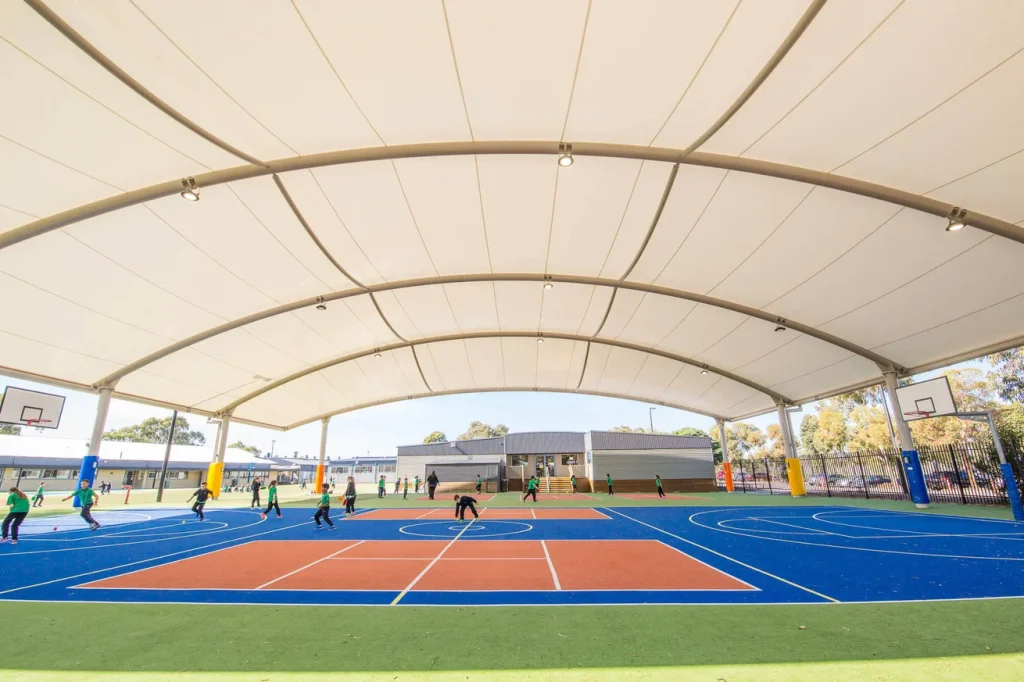
 Fabric Membrane Structures (PVC / PTFE)
Why choose it: Stylish, light, and flexible.
Pros:
Natural daylight enters the space
Can be shaped in arcs, curves, or custom designs
Strong against wind, snow, and UV rays
Cons:
Requires proper drainage design
Needs professional installation
Story: A Toronto high school installed a fabric membrane last year. Within weeks, games continued without rain cancellations, and community programs increased by 30%!
 Shade Structures (Shade Sails / Hip & Ridge)
Why choose it: Sun protection for sidelines, seating, and playground areas.
Pros:
Affordable and flexible
Great for spectator areas or perimeter coverage
Cons:
Does not protect against snow or heavy rain
Not recommended as the main court cover in Canada
How High Should Your Cover Be?
Height is crucial to ensure proper gameplay. Balls shouldn’t hit the roof during play.
| Court Type | Recommended Height |
|---|---|
| High school / multi-use | 5m at edges, 7–10m at centre |
| Primary schools | 3–4m minimum |
| Competitive / regulation courts | Follow sport-specific standards |
Protecting Your Court Surface
If your court has existing surfacing (acrylic coatings, turf, cushioned flooring), temporary surface protection is necessary during installation. Coordinating resurfacing with the cover installation can save cost and reduce downtime.
Extra Features to Enhance Your Court
Your court cover can do more than just shelter:
- LED sports lighting
- Roof-mounted basketball hoops or netting
 Sound systems
 Scoreboards
DXU can integrate these during the design phase, ensuring everything fits seamlessly.
What’s the Best Option?
There’s no single “best” cover—only the one that fits your climate, usage, and budget:
Maximum durability & all-weather use: Steel canopy
Aesthetic, light, and flexible design: Fabric membrane
Sun protection & additional shade: Shade structures
Ready to Cover Your Court?
At DXU Sports Facility Solutions, we provide full-service solutions across Canada—from concept and engineering to fabrication and installation.
We’ll help you:
Choose the right structure type
Plan for snow/wind loads
Integrate lighting and features
Stay on budget and on schedule